Colorful plant and animal diversity
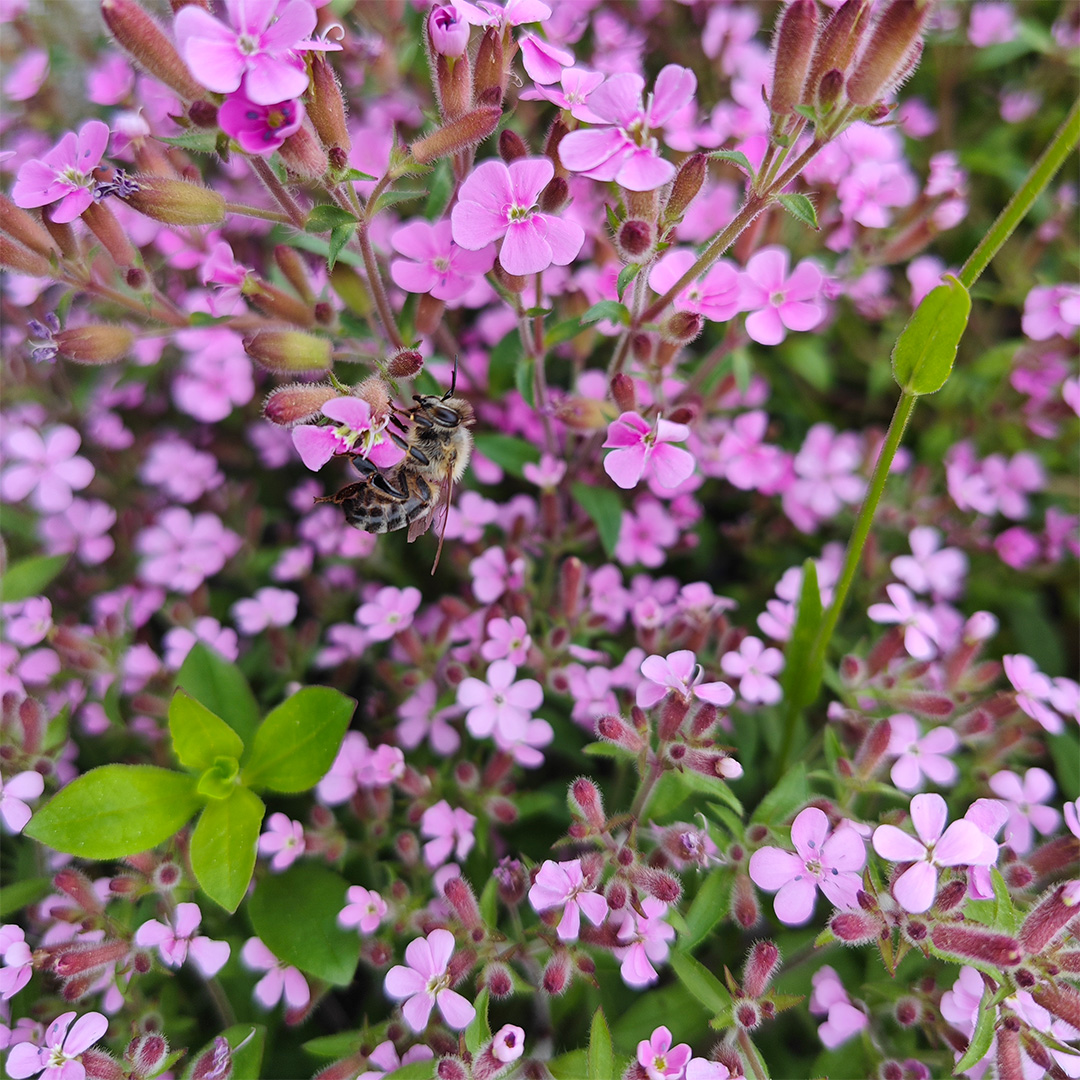
The red soapwort
It glows pink between the scented and herb beds: the red soapwort creates a colorful sea of flowers from May to July and attracts many insects. The perennial wild perennial belongs to the carnation family, of which there are around 43 species of soapwort. A special ingredient in the plant is the so-called saponin - when dissolved in water, it forms foam, almost like soap. That's why common soapwort was actually used as a natural detergent in the past. Today it is primarily an eye-catcher with ecological significance. Season: F/S
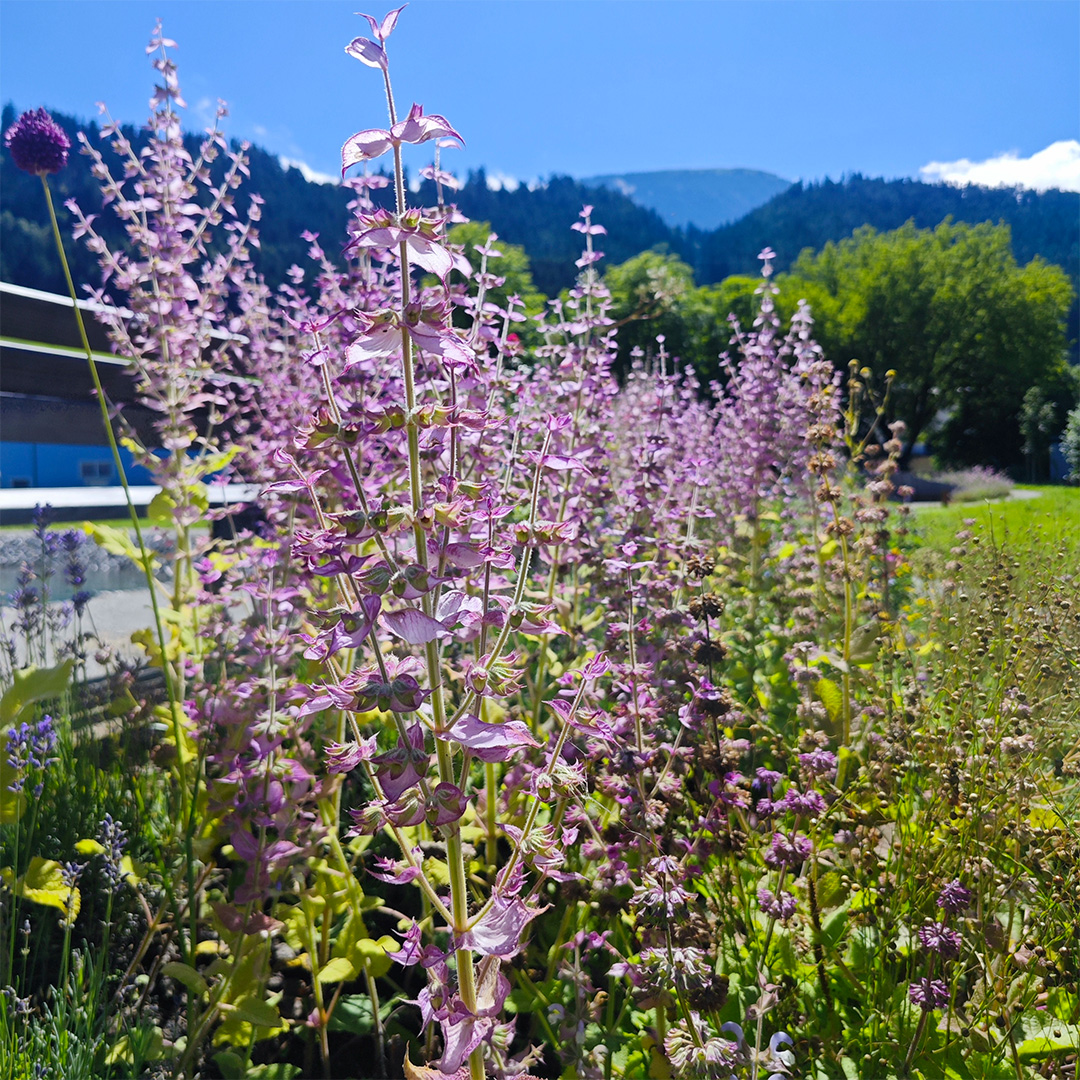
Clary sage
Clary sage is not a native herb, but it clearly feels at home in our herb beds - and smells wonderful! Its magnificent, nectar-rich flowers attract numerous bees and other pollinators. This makes it a real enrichment for insects and noses alike. The aromatic oils are used in perfume production, and the leaves can also be used as a herb - similar to sage. Season: S/H
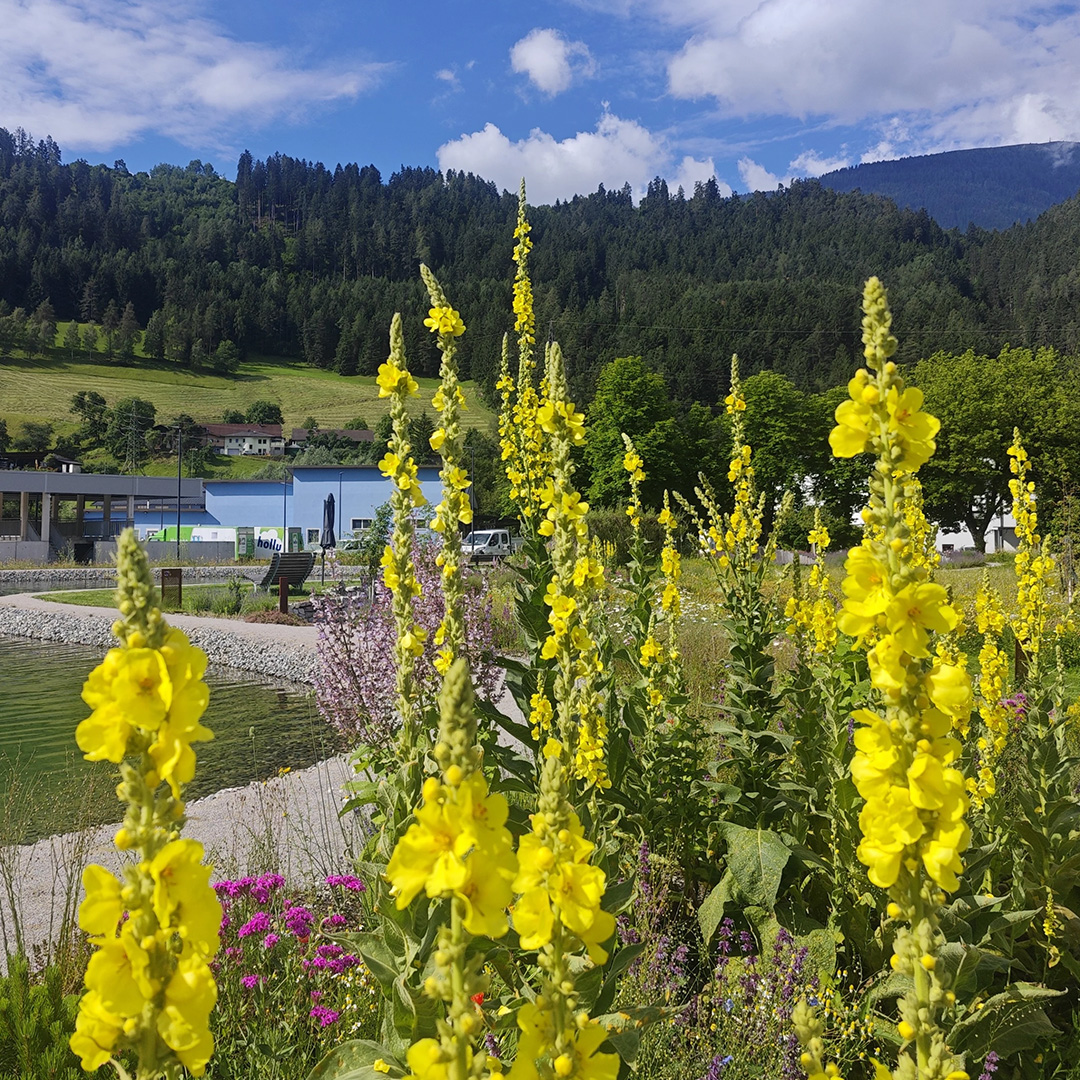
The large-flowered mullein
Majestic and bright yellow: the large-flowered mullein lives up to its name and towers over many other plants in summer. In the first year it only appears as an inconspicuous rosette of leaves, but in the second year it grows up to two meters high and blooms magnificently. The native plant loves sun, is easy to care for and robust. Its flowers are rich in pollen and are a magnet for bees, bumblebees, beetles and many other insects. It has also been valued by humans for centuries - for example as a medicinal plant for colds. The dried flowers make a soothing tea. In our nature recreation park it provides color, diversity and buzzing life in summer time.
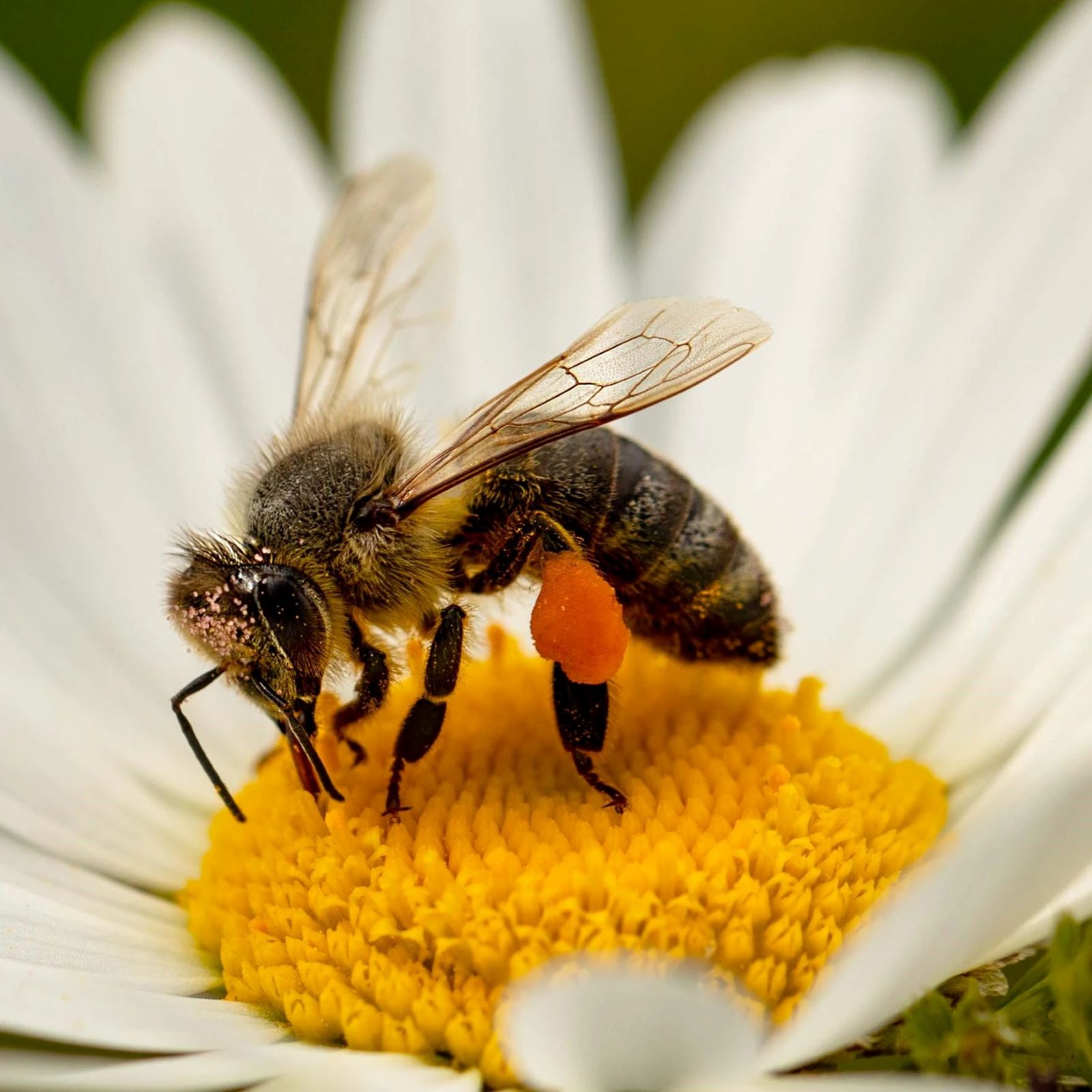
The honey bee
From now on the honey bees can be observed at work again: in the Display bee box on the edge of the flower meadow you can observe the fascinating life of the bees in peace. What at first glance seems like a hustle and bustle turns out to be a perfectly organized system upon closer inspection.
Each bee in the hive has a specific job. The bee colony consists almost exclusively of sterile females who perform various tasks such as caring for the brood or collecting food.
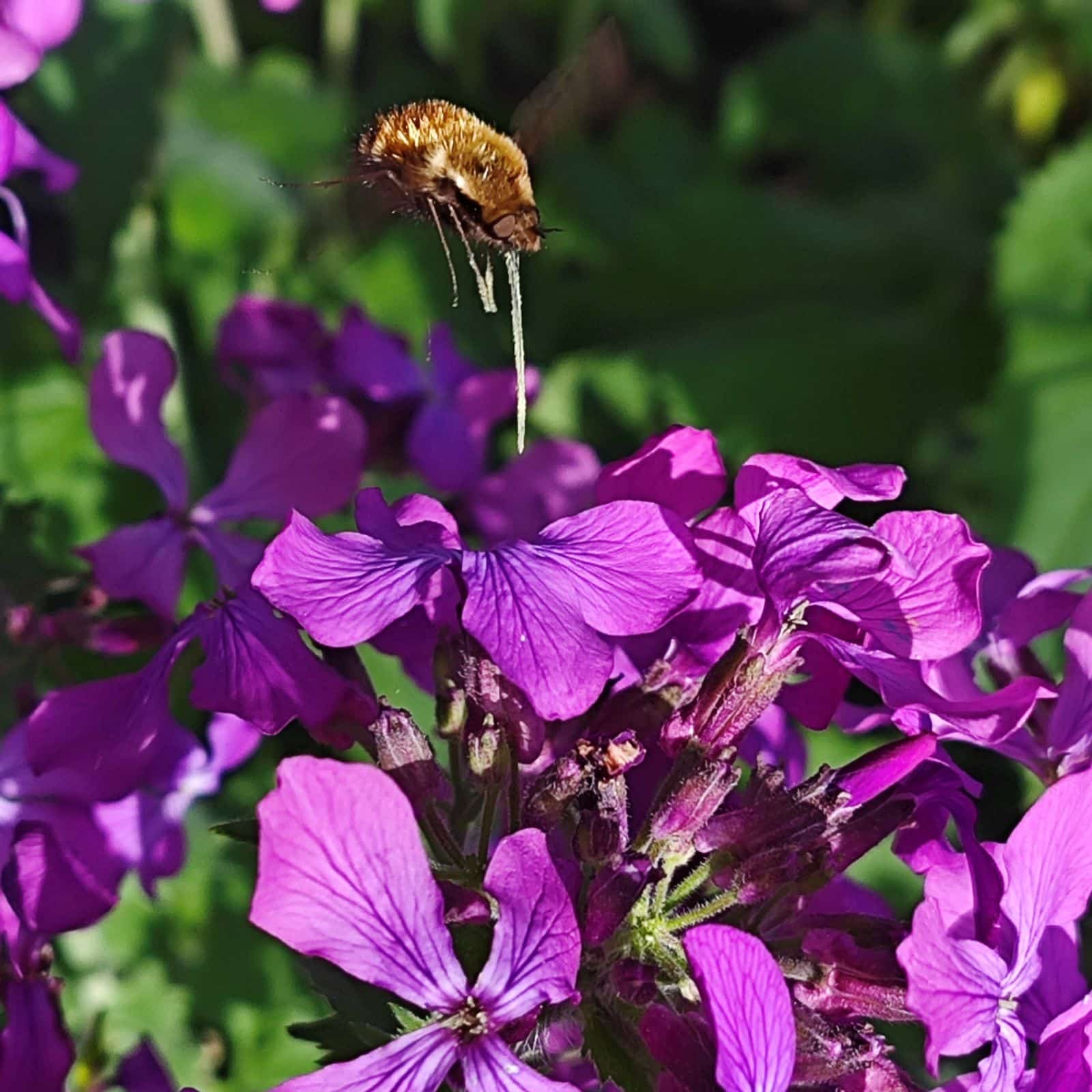
The big wool floater
At first glance, the Greater Woolly Floater looks like a small bumblebee, but it is a fly. With its long trunk it hovers in front of flowers like a tiny hummingbird and sucks nectar - nimble, silent and a great pollinator! Its offspring are less charming: The larvae develop as parasites in the nests of wild bees, digger wasps or certain butterflies, where they feed on their offspring.
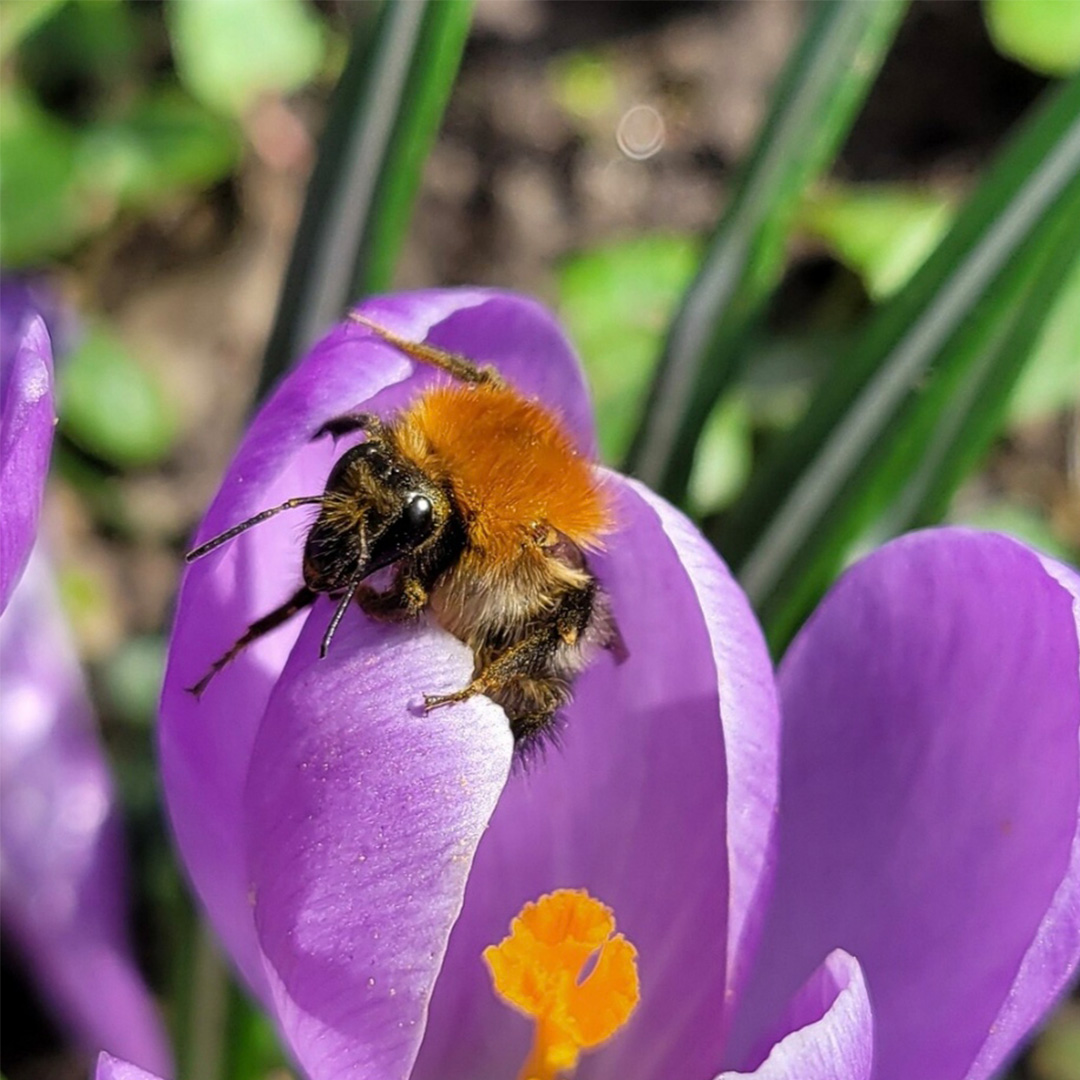
The field bumblebee
Bumblebees are real messengers of spring! In contrast to honey bees, only the young queen survives the winter. In the spring she sets off alone in search of a nesting place - and founds a new colony there. There are around 45 species of bumblebees in Austria. The field bumblebee (Bombus pascuorum) is particularly common. Its furry body buzzes diligently from flower to flower and plays an important role in pollination.
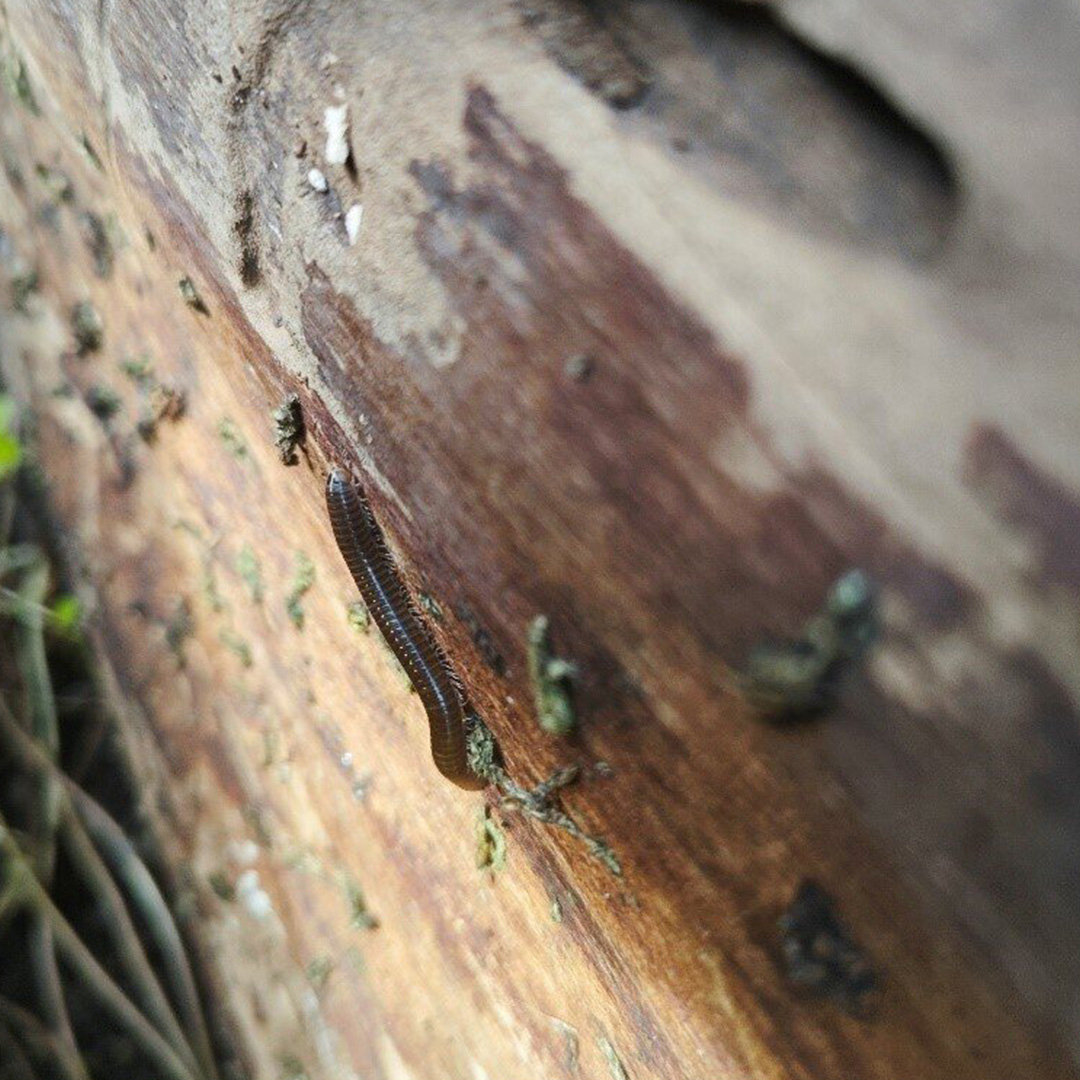
The centipede
Even if the name suggests otherwise, millipedes usually “only” have around 200 pairs of legs. The shiny gray-black polypods belong to the huge group of arthropods, the most species-rich animal phylum of all. They prefer to live in damp and dark places, are nocturnal and are real soil helpers: as humus builders, they eat dead plant parts and convert them into fertile soil. In this way, like earthworms, they make an important contribution to soil health. They are not dangerous for us, but they are dangerous for the birds and reptiles that have them on their menu.
The red soapwort
It glows pink between the scented and herb beds: the red soapwort creates a colorful sea of flowers from May to July and attracts many insects. The perennial wild perennial belongs to the carnation family, of which there are around 43 species of soapwort. A special ingredient in the plant is the so-called saponin - when dissolved in water, it forms foam, almost like soap. That's why common soapwort was actually used as a natural detergent in the past. Today it is primarily an eye-catcher with ecological significance. Season: F/S
Clary sage
Clary sage is not a native herb, but it clearly feels at home in our herb beds - and smells wonderful! Its magnificent, nectar-rich flowers attract numerous bees and other pollinators. This makes it a real enrichment for insects and noses alike. The aromatic oils are used in perfume production, and the leaves can also be used as a herb - similar to sage. Season: S/H
The large-flowered mullein
Majestic and bright yellow: the large-flowered mullein lives up to its name and towers over many other plants in summer. In the first year it only appears as an inconspicuous rosette of leaves, but in the second year it grows up to two meters high and blooms magnificently. The native plant loves sun, is easy to care for and robust. Its flowers are rich in pollen and are a magnet for bees, bumblebees, beetles and many other insects. It has also been valued by humans for centuries - for example as a medicinal plant for colds. The dried flowers make a soothing tea. In our nature recreation park it provides color, diversity and buzzing life in summer time.
The honey bee
From now on the honey bees can be observed at work again: in the Display bee box on the edge of the flower meadow you can observe the fascinating life of the bees in peace. What at first glance seems like a hustle and bustle turns out to be a perfectly organized system upon closer inspection.
Each bee in the hive has a specific job. The bee colony consists almost exclusively of sterile females who perform various tasks such as caring for the brood or collecting food.
The big wool floater
At first glance, the Greater Woolly Floater looks like a small bumblebee, but it is a fly. With its long trunk it hovers in front of flowers like a tiny hummingbird and sucks nectar - nimble, silent and a great pollinator! Its offspring are less charming: The larvae develop as parasites in the nests of wild bees, digger wasps or certain butterflies, where they feed on their offspring.
The field bumblebee
Bumblebees are real messengers of spring! In contrast to honey bees, only the young queen survives the winter. In the spring she sets off alone in search of a nesting place - and founds a new colony there. There are around 45 species of bumblebees in Austria. The field bumblebee (Bombus pascuorum) is particularly common. Its furry body buzzes diligently from flower to flower and plays an important role in pollination.
The centipede
Even if the name suggests otherwise, millipedes usually “only” have around 200 pairs of legs. The shiny gray-black polypods belong to the huge group of arthropods, the most species-rich animal phylum of all. They prefer to live in damp and dark places, are nocturnal and are real soil helpers: as humus builders, they eat dead plant parts and convert them into fertile soil. In this way, like earthworms, they make an important contribution to soil health. They are not dangerous for us, but they are dangerous for the birds and reptiles that have them on their menu.

Our tips
🌿 Discover the variety of local herbs – many of them are edible and invite you to get to know them.
👃 Let your nose have a say – enjoy the scent of various herbs and flowers.
Let's continue!
👉 Head to the next station – the next nature experience is waiting for you there. Simply follow the path - once you get there you will find a sign with a QR code that will take you directly to the appropriate page.