Colorful plant and animal diversity
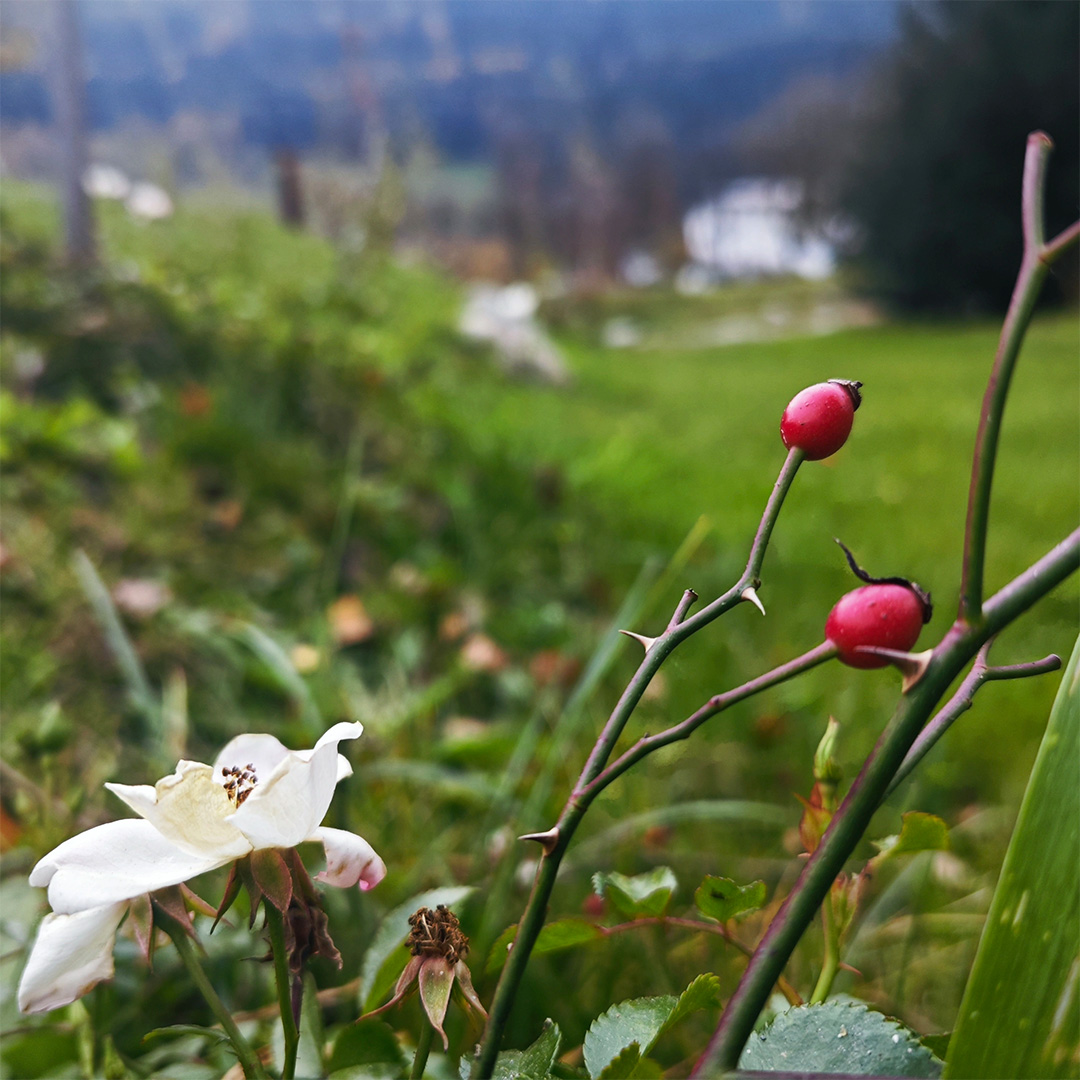
Wild roses
Wild roses are real natural talents: easy to care for, robust and full of life. Unlike many cultivated varieties, they require little attention and offer even more - especially for insects such as butterflies, wild bees, beetles and wasps. Around 30 species of wild roses are native to Central Europe. Its unfilled, five-petalled flowers only bloom once, but all the more intensely. After flowering, they form rose hips - all edible! They can be used to make tea, jelly or jam. Or they simply stay on the bush and become a valuable source of food for birds in winter. Wild roses are as nature created them - beautiful, useful and original.
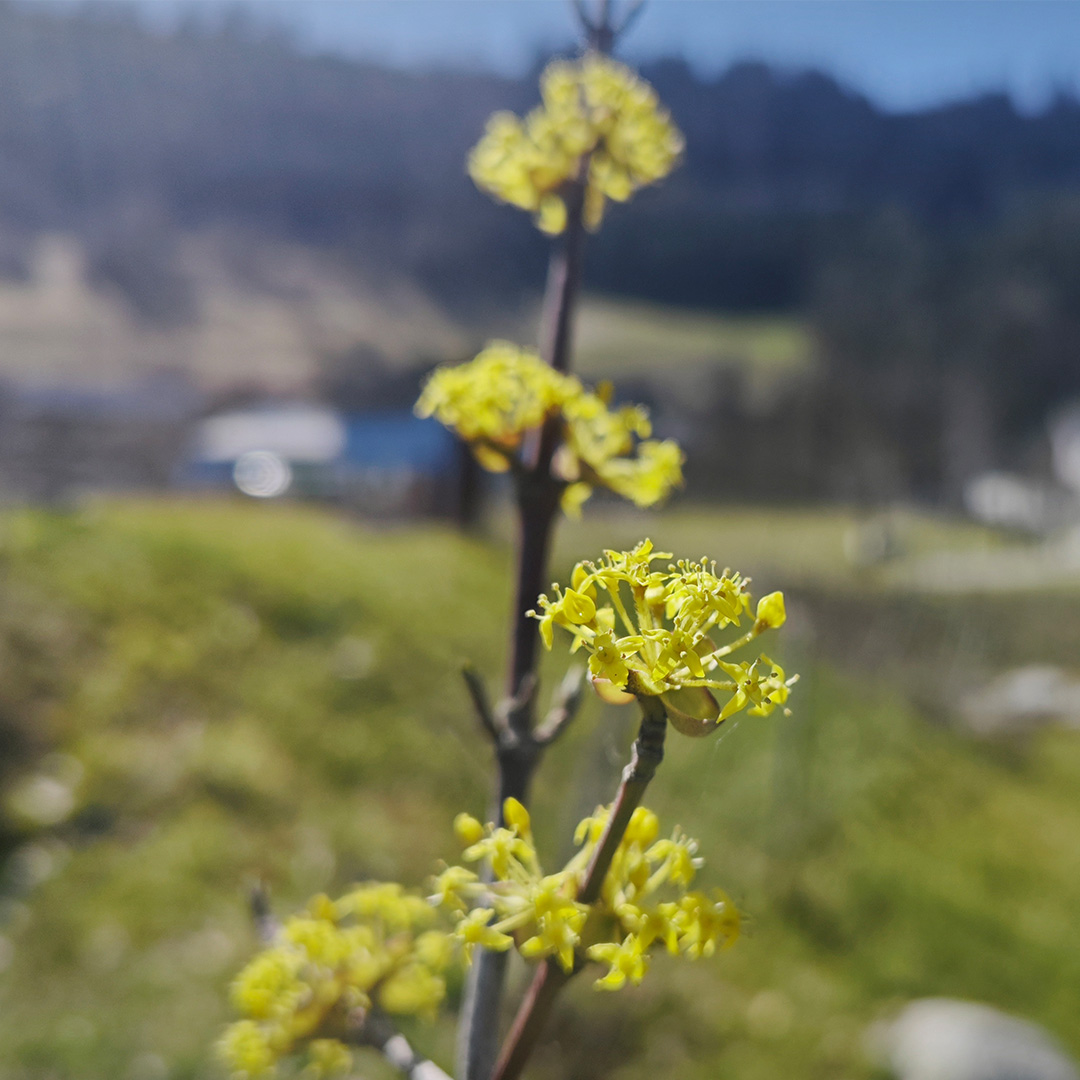
Cornelian cherry
The cornelian cherry is not only pretty, but also really robust - no wonder it was voted Shrub of the Year 2024! It defies drought and wind and often blooms in February, even before the leaves are there. This makes it one of the first important food sources for insects of the year. In summer, many birds - and we humans too - are happy about the healthy, edible fruits.
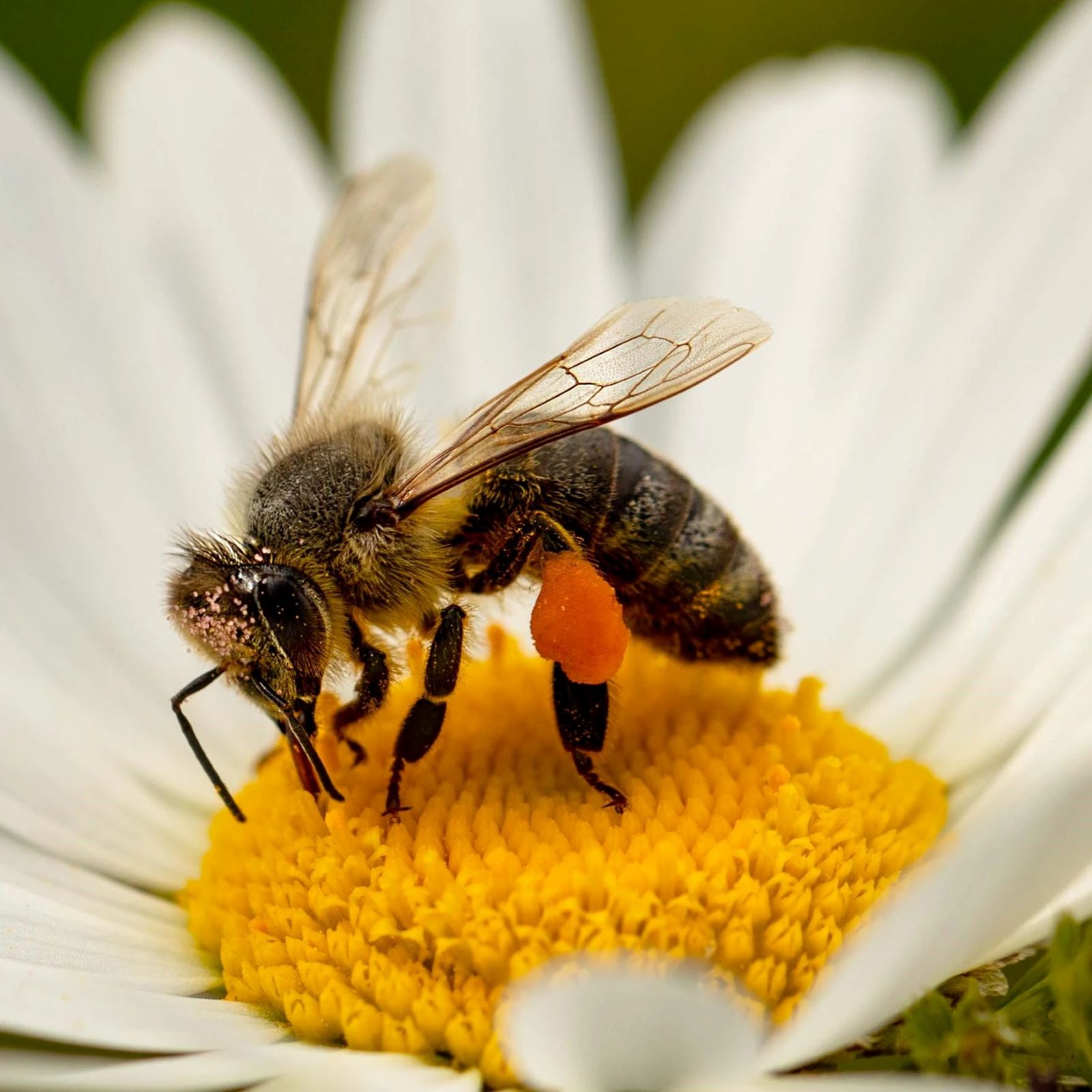
The honey bee
In the display bee box at the edge of the flower meadow you can observe the life of honey bees up close. What looks like a hustle and bustle is actually a perfectly organized system. Every bee in the hive has its job: Most are sterile females that take care of brood care, building honeycombs or collecting nectar. Male bees - the drones - only live to mate with the queen during her nuptial flight. The queen is significantly larger and can be easily recognized by the colored dot on her abdomen. Their main job: laying eggs. Even if many people immediately think of honey when they hear “bee”, there are around 700 species of wild bees living in Austria, most of which travel alone. There’s more about this in our own wild bee chapter!
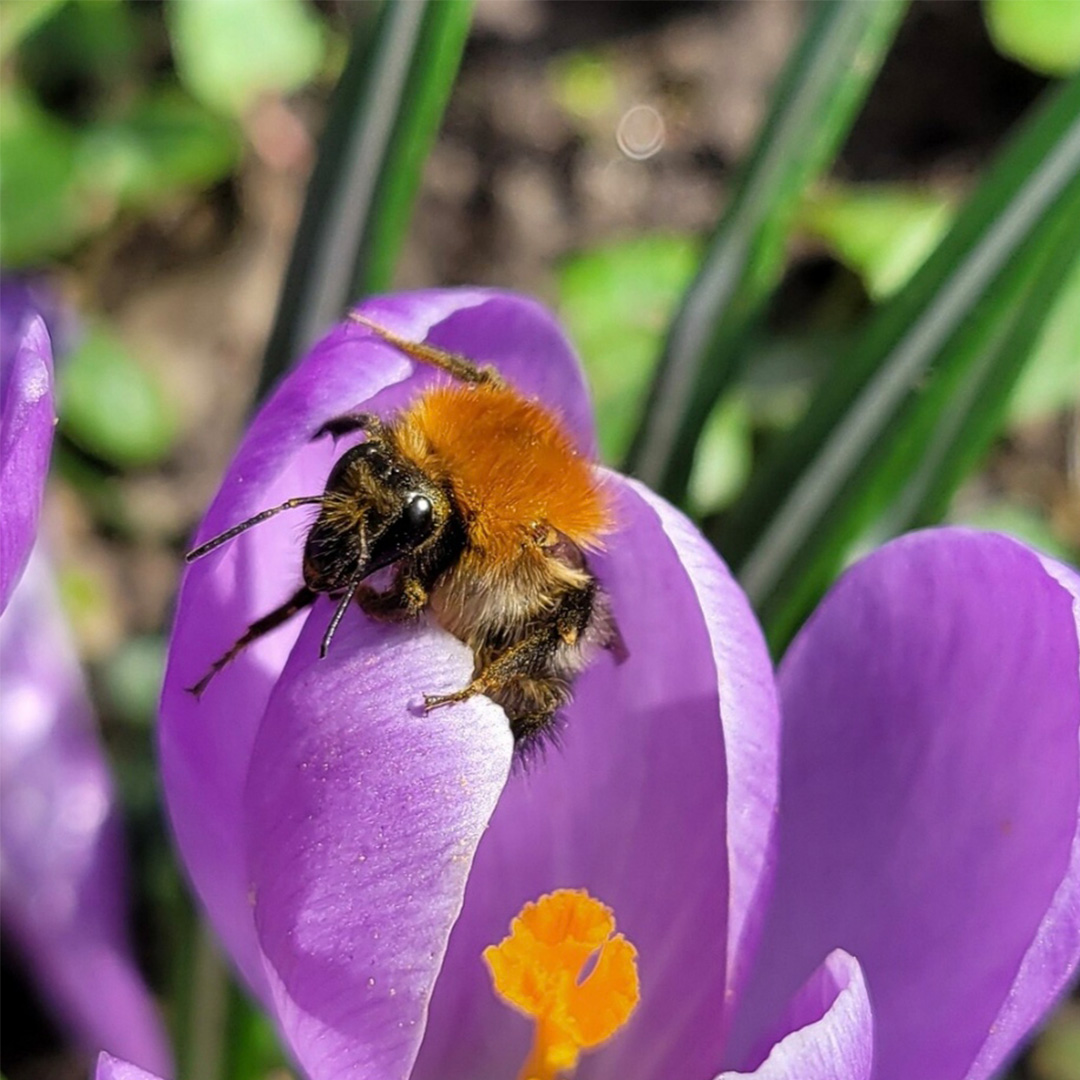
bumblebee
Bumblebees are real messengers of spring! In contrast to honey bees, only the young queen survives the winter. In the spring she sets off alone in search of a nesting place - and establishes her new colony there. There are around 45 species of bumblebees in Austria. The field bumblebee (Bombus pascuorum) is particularly common. Its furry body buzzes diligently from flower to flower and plays an important role in pollination.
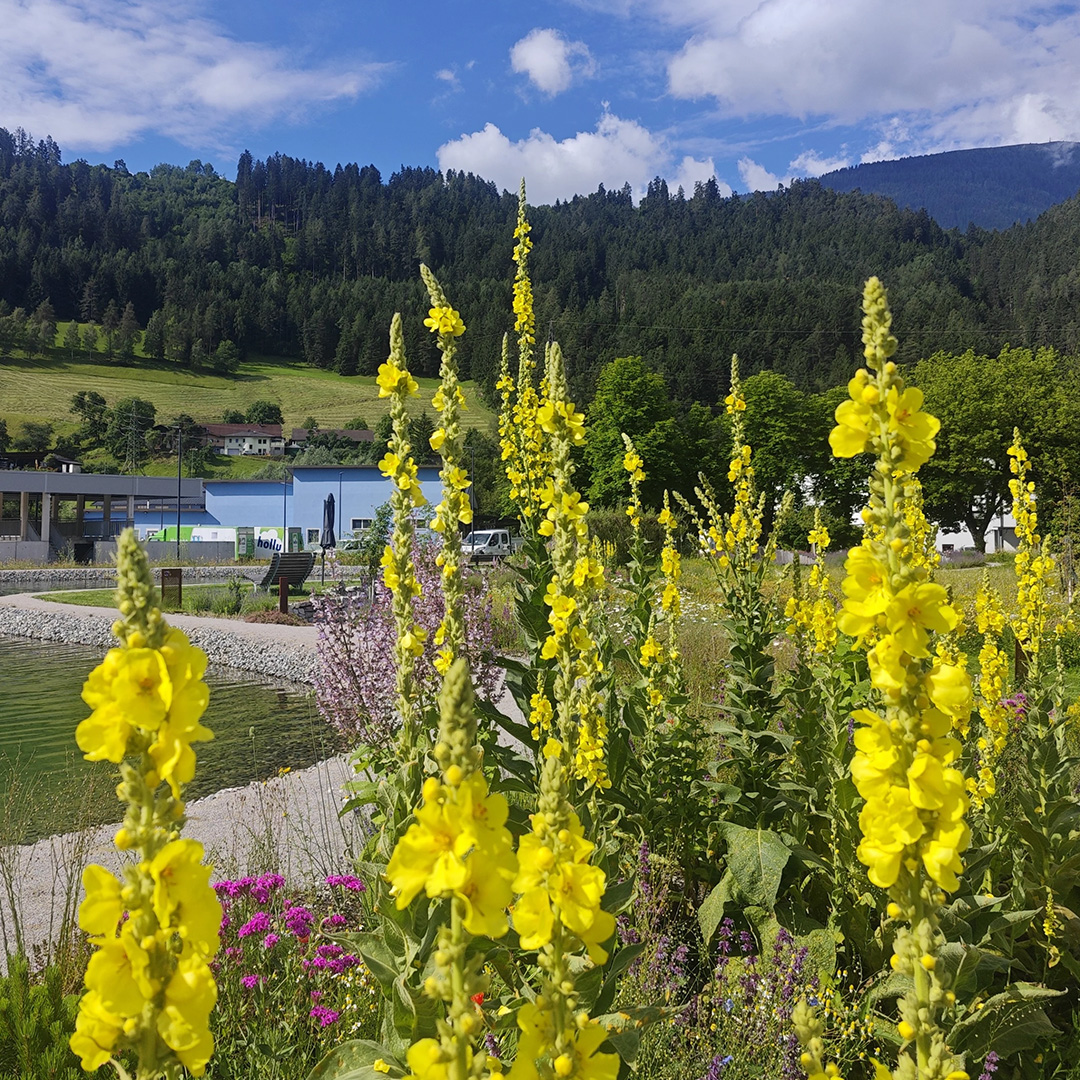
Large-flowered mullein
Majestic and bright yellow: the large-flowered mullein lives up to its name and towers over many other plants in summer. In the first year it only appears as an inconspicuous rosette of leaves, but in the second year it grows up to two meters high and blooms magnificently. The native plant loves sun, is easy to care for and robust. Its flowers are rich in pollen and are a magnet for bees, bumblebees, beetles and many other insects. It has also been valued by humans for centuries - for example as a medicinal plant for colds. The dried flowers make a soothing tea. In our nature recreation park it provides color, diversity and buzzing life in summer time.
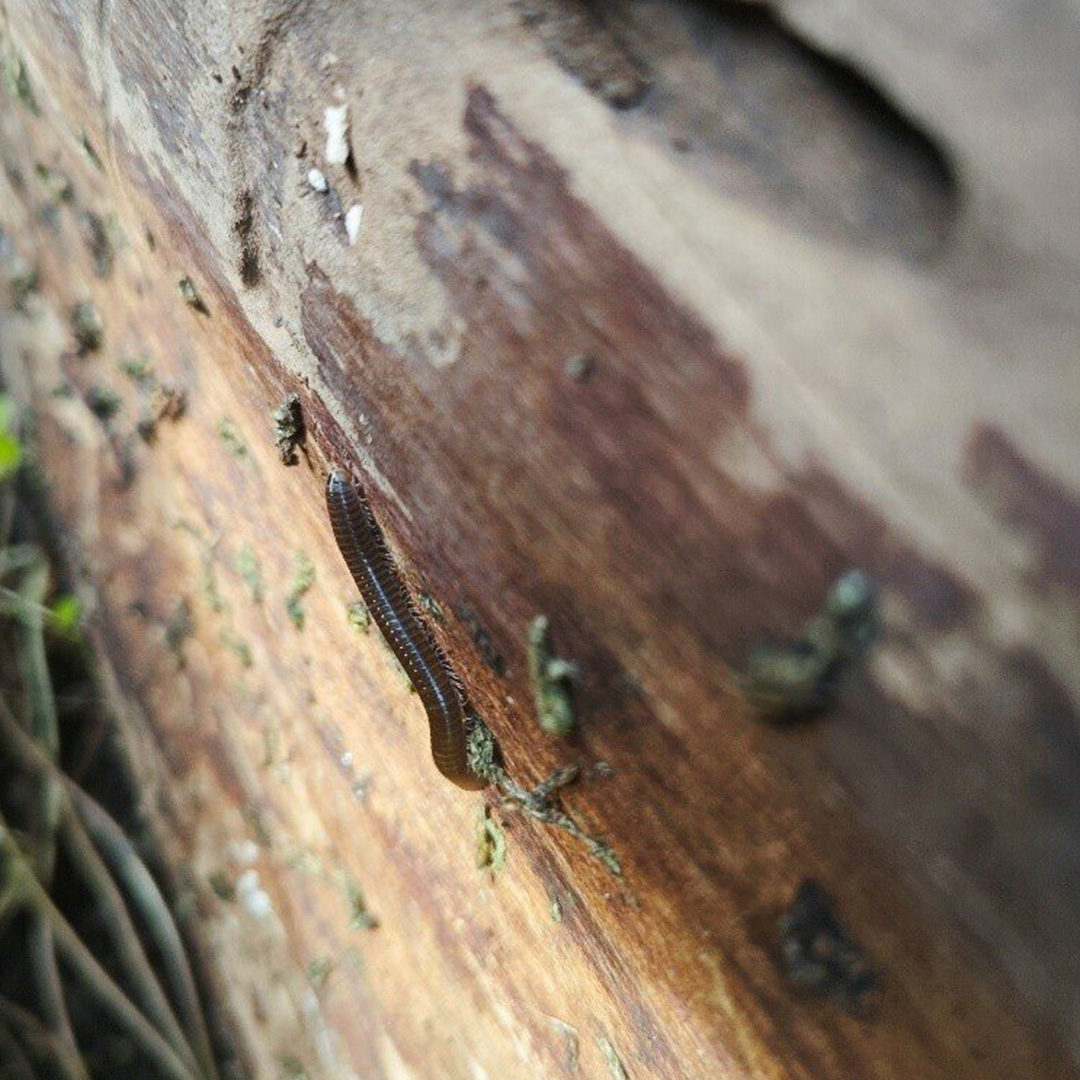
Millipede
Even if the name suggests otherwise, millipedes usually “only” have around 200 pairs of legs. The shiny gray-black polypods belong to the huge group of arthropods, the most species-rich animal phylum of all. They prefer to live in damp and dark places, are nocturnal and are real soil helpers: as humus builders, they eat dead plant parts and convert them into fertile soil. In this way, like earthworms, they make an important contribution to soil health. They are not dangerous for us, but they are dangerous for the birds and reptiles that have them on their menu.
Hare
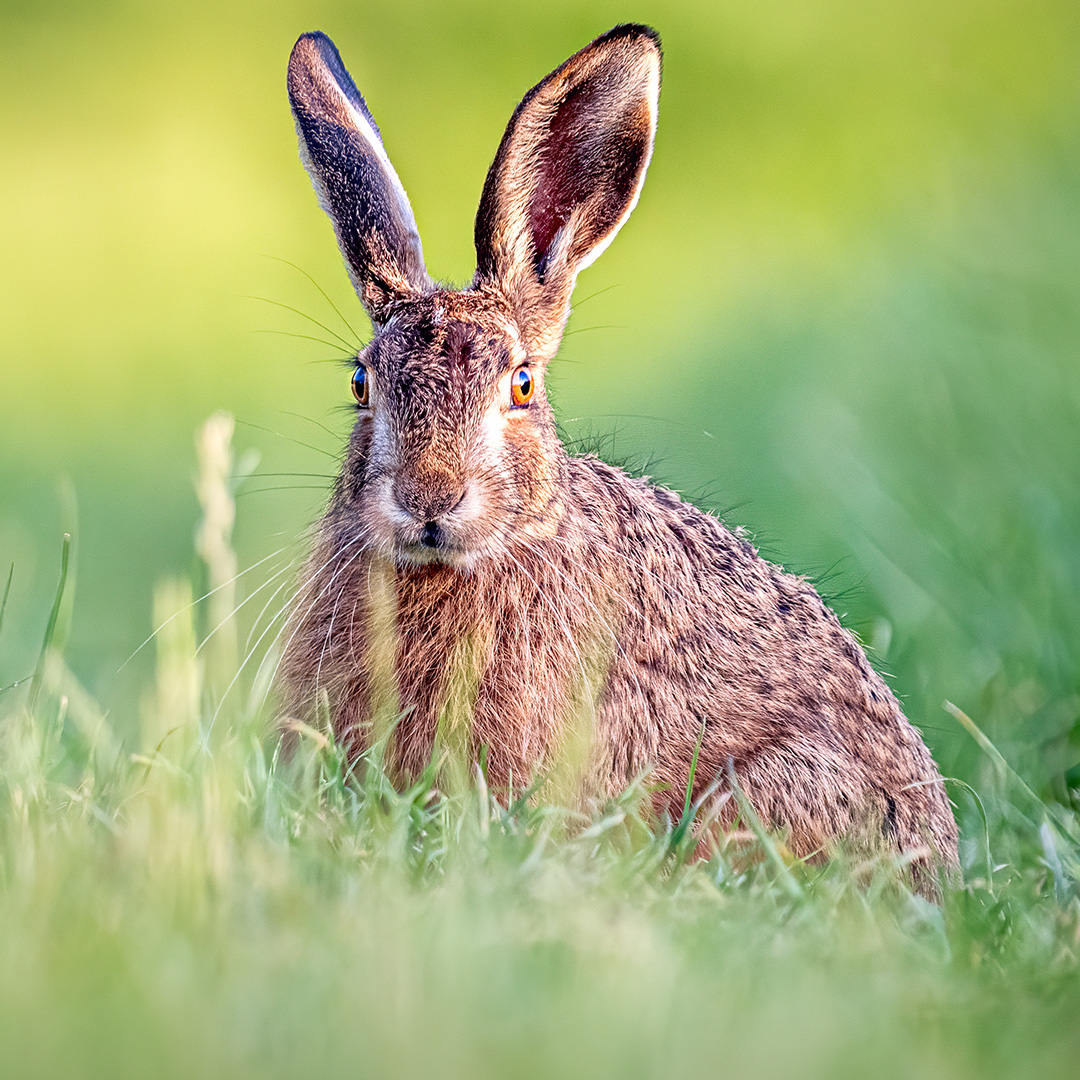
If you look closely in winter, you might discover hare tracks in the snow: two parallel prints - these are the strong hind legs - and behind them two smaller ones from the front paws. This is how the brown hare hops through the park. With his good hearing, perfect camouflage and impressive sprinting power, he is a real survivor. In winter, its fur becomes lighter and adapts perfectly to its surroundings. But even though he is so adaptable, the brown hare has a hard time today. Intensive agriculture and fragmented habitats are affecting it. Its natural enemies include foxes, badgers, martens and birds of prey. It's even nicer when traces can still be found in the nature recreation park.
Wild roses
Wild roses are real natural talents: easy to care for, robust and full of life. Unlike many cultivated varieties, they require little attention and offer even more - especially for insects such as butterflies, wild bees, beetles and wasps. Around 30 species of wild roses are native to Central Europe. Its unfilled, five-petalled flowers only bloom once, but all the more intensely. After flowering, they form rose hips - all edible! They can be used to make tea, jelly or jam. Or they simply stay on the bush and become a valuable source of food for birds in winter. Wild roses are as nature created them - beautiful, useful and original.
Cornelian cherry
The cornelian cherry is not only pretty, but also really robust - no wonder it was voted Shrub of the Year 2024! It defies drought and wind and often blooms in February, even before the leaves are there. This makes it one of the first important food sources for insects of the year. In summer, many birds - and we humans too - are happy about the healthy, edible fruits.
The honey bee
In the display bee box at the edge of the flower meadow you can observe the life of honey bees up close. What looks like a hustle and bustle is actually a perfectly organized system. Every bee in the hive has its job: Most are sterile females that take care of brood care, building honeycombs or collecting nectar. Male bees - the drones - only live to mate with the queen during her nuptial flight. The queen is significantly larger and can be easily recognized by the colored dot on her abdomen. Their main job: laying eggs. Even if many people immediately think of honey when they hear “bee”, there are around 700 species of wild bees living in Austria, most of which travel alone. There’s more about this in our own wild bee chapter!
bumblebee
Bumblebees are real messengers of spring! In contrast to honey bees, only the young queen survives the winter. In the spring she sets off alone in search of a nesting place - and establishes her new colony there. There are around 45 species of bumblebees in Austria. The field bumblebee (Bombus pascuorum) is particularly common. Its furry body buzzes diligently from flower to flower and plays an important role in pollination.
Large-flowered mullein
Majestic and bright yellow: the large-flowered mullein lives up to its name and towers over many other plants in summer. In the first year it only appears as an inconspicuous rosette of leaves, but in the second year it grows up to two meters high and blooms magnificently. The native plant loves sun, is easy to care for and robust. Its flowers are rich in pollen and are a magnet for bees, bumblebees, beetles and many other insects. It has also been valued by humans for centuries - for example as a medicinal plant for colds. The dried flowers make a soothing tea. In our nature recreation park it provides color, diversity and buzzing life in summer time.
Millipede
Even if the name suggests otherwise, millipedes usually “only” have around 200 pairs of legs. The shiny gray-black polypods belong to the huge group of arthropods, the most species-rich animal phylum of all. They prefer to live in damp and dark places, are nocturnal and are real soil helpers: as humus builders, they eat dead plant parts and convert them into fertile soil. In this way, like earthworms, they make an important contribution to soil health. They are not dangerous for us, but they are dangerous for the birds and reptiles that have them on their menu.
Hare
If you look closely in winter, you might discover hare tracks in the snow: two parallel prints - these are the strong hind legs - and behind them two smaller ones from the front paws. This is how the brown hare hops through the park. With his good hearing, perfect camouflage and impressive sprinting power, he is a real survivor. In winter, its fur becomes lighter and adapts perfectly to its surroundings. But even though he is so adaptable, the brown hare has a hard time today. Intensive agriculture and fragmented habitats are affecting it. Its natural enemies include foxes, badgers, martens and birds of prey. It's even nicer when traces can still be found in the nature recreation park.
Our tips
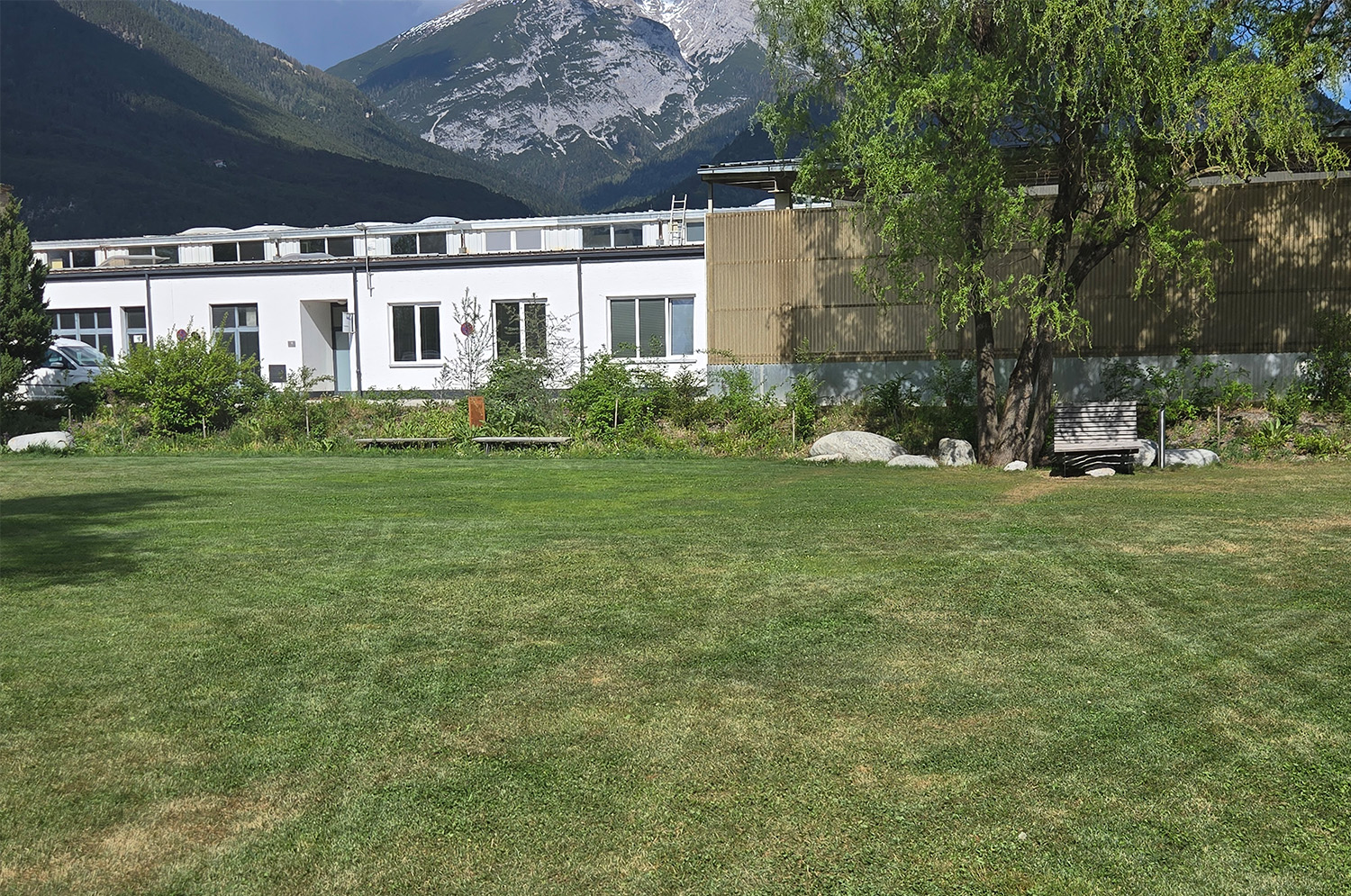
🤸 Use the free space for exercise – whether stretching, exercising or simply running barefoot
🧘 Take a Break on the meadow – sun or shade, this is a wonderful place to relax
💻 Move your next meeting outside – fresh air brings new ideas
Let's continue!
👉 Head to the next station – the next nature experience is waiting for you there. Simply follow the path - once you get there you will find a sign with a QR code that will take you directly to the appropriate page.